
Exploring the AANHPI Funding Gap
Five takeaways from a new study, and what the Asian Community Fund is doing about it
Nonprofit organizations focused on supporting Asian American, Native Hawaiian and Pacific Islander (AANHPI) communities are underfunded. That much is easy to say. But understanding the details of how (and how many) philanthropic dollars reach AANHPI communities requires more than a single snapshot or metric.
This brief brings together data from a report from Asian American Partners in Philanthropy (AAPIP) titled “The 2026 Boston Metro Area AANHPI Funding Snapshot,” alongside grantmaking data from the Asian Community Fund (ACF) at the Boston Foundation. These combined datasets allow us to explore:
1
The AANHPI funding gap is real, and in Greater Boston, it is especially pronounced
Greater Boston’s Asian American and Pacific islander population has grown rapidly in recent decades. Today, the five Massachusetts counties representing Greater Boston (Suffolk, Norfolk, Essex, Middlesex, and Plymouth) are home to approximately 484,000 AAPI and Native Hawaiian people, nearly 11 percent of the region’s population.
Boston Metro Area AANHPI population
| Regional population (total) | Share of total regional population | Share of national population of ethnic racial group | |
|---|---|---|---|
| Asian American | 473,384 | 10.59% | 2.00% |
| Native Hawaiian and Pacific Islander | 10,787 | 0.24% | 0.66% |
AANHPIs are the fastest growing racial group in Massachusetts, and nearly half a million live in Greater Boston. But from 2019 to 2023, just 11 cents of every $100 in institutional philanthropic funding was directed to organizations whose primary focus is serving AANHPI populations. That’s not 11 percent. It’s 0.11 percent. And it’s just one-third of the funding rate for AANHPI-focused nonprofits nationally.
Of every $100 awarded in Greater Boston, just 11¢ reached AANHPI communities
Institutional grantmaking, 2019–2023
Put in dollar terms: Of the $45.7 billion in institutional grantmaking in Greater Boston over that five-year period, just $48.1 million was directed to AANHPI-focused nonprofits.
THE ACF RESPONSE: Since 2022, the Asian Community Fund has distributed more than $2.4 million to 135 distinct Asian-serving nonprofits across the Commonwealth. The ACF also serves as a trusted resource for other institutional funders and individual donors, helping to catalyze and inspire more giving to the AAPI nonprofit, business, and cultural sectors.
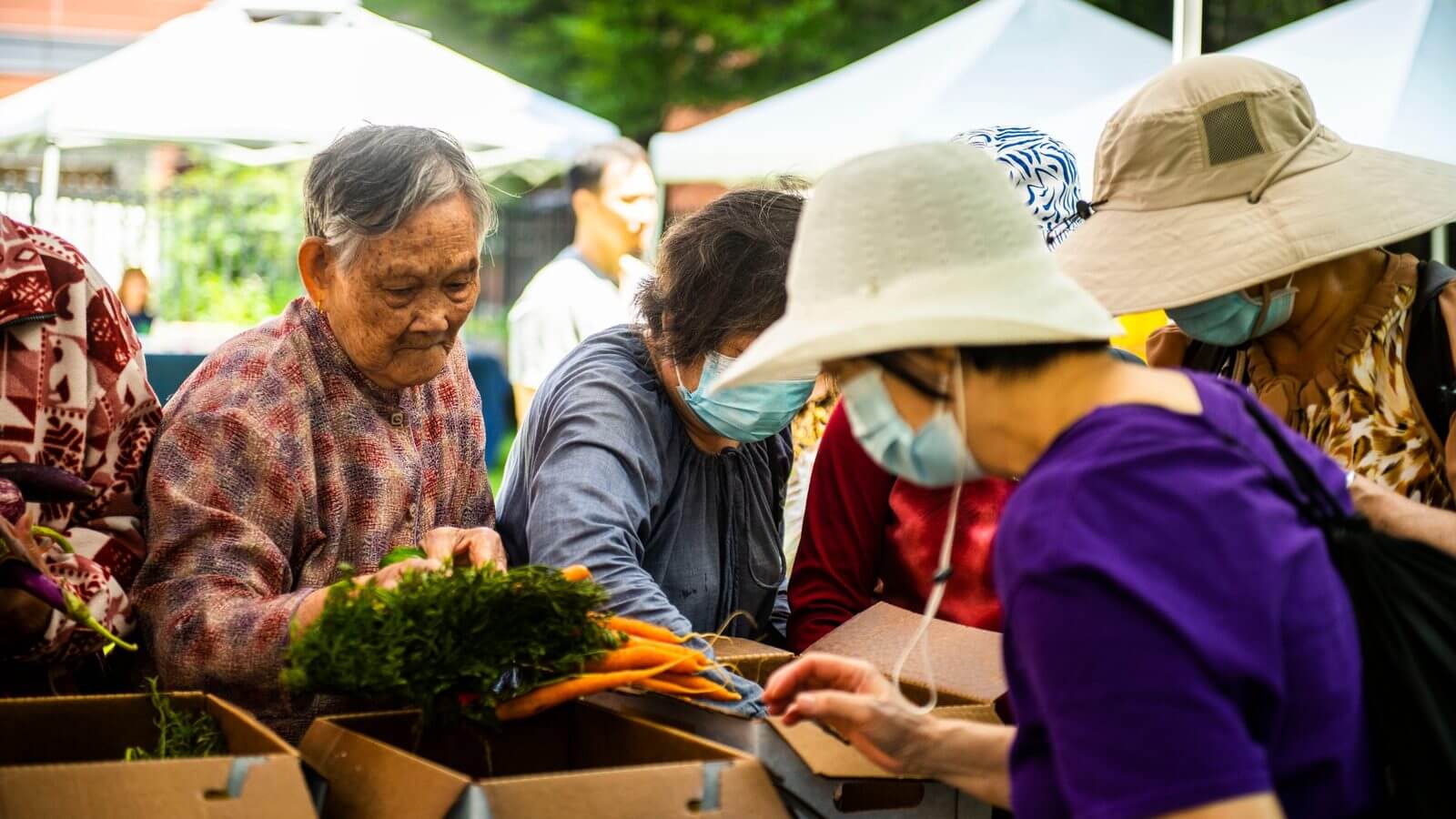
“Thank you and the team for supporting community orgs like ours with this generous grant! We look forward to using the grant money to continue projects like our Philippine Independence Day Festival and PAMANA Cares, our grocery care package delivery program.”
Jelyn Masa, Chairperson, Philippine American Mainstream Advocacy for Nonpartisan Associations (PAMANA)
2
When funders pay attention, money moves… but attention can be fleeting.
Despite the disturbingly low numbers overall, there is evidence that when issues generate attention, funders do respond. For example, after the brutal murders at Atlanta-area spaces and a spike in anti-Asian violence during the COVID-19 pandemic, funders across the country stepped up their commitments to AANHPI causes and organizations. In Greater Boston, funders more than doubled their support for AANHPI-focused nonprofits, from $6.8 million to $13.8 million between 2020 and 2021. However, these spikes are often short-lived: Funding declined to $10.5 million in 2022. Nationally, AANHPI funding has never exceeded 0.60% of institutional giving.
AANHPI funding has never exceeded 0.60% of institutional giving
Share of institutional grant dollars focused on AANHPI communities, 1983–2023
THE ACF RESPONSE: ACF’s role as a funder of research, advocacy, and economic opportunity is critical in supporting and protecting the rights of residents, community organizations, and AAPI businesses. Amid changing tides and funding interests, local philanthropic intermediaries like ACF ensure that the needs of our community stay visible and funded, long after national attention and giving priorities have moved on
3
Allocation of limited philanthropic dollars leaves gaps in where funding goes and who it reaches.
Organizations serving AANHPI residents outside of Greater Boston often fall beyond funders’ view. While 18% of Asian residents live outside of the five counties within Greater Boston, the AAPIP report shows that just 7.7% of institutional grantmaking was directed outside of the Boston Metro Area.
Funding outside the Boston Metro area
Share of AANHPI-directed funding awarded outside the Boston Metro area
The gaps in ethnic representation are just as clear. Funding for AANHPI nonprofits in Greater Boston tends to favor longer-established, larger, East Asian-focused organizations. As a result, many communities are underrepresented in the funding landscape, including newer immigrant populations. Between 2019 and 2023, Central Asians in Massachusetts received just 0.03% of AANHPI funding, while South Asians and Southeast Asians received 2.75% and 12.23% of all statewide AANHPI funding, respectively.
AANHPI sub-population funding in MA
Share of total funding awarded to each sub-population
THE ACF RESPONSE: Compared with the regional baseline from AAPIP, ACF has been three times as likely to make grants outside of Greater Boston (22 percent vs. 7.7 percent), and with the AAPI Arts and Culture Collaborative, nearly three times as likely to support Asian cultural organizations.
1 in 3 of all 2024 Massachusetts grants to AAPI-focused organizations came from the Asian Community Fund or the Boston Foundation
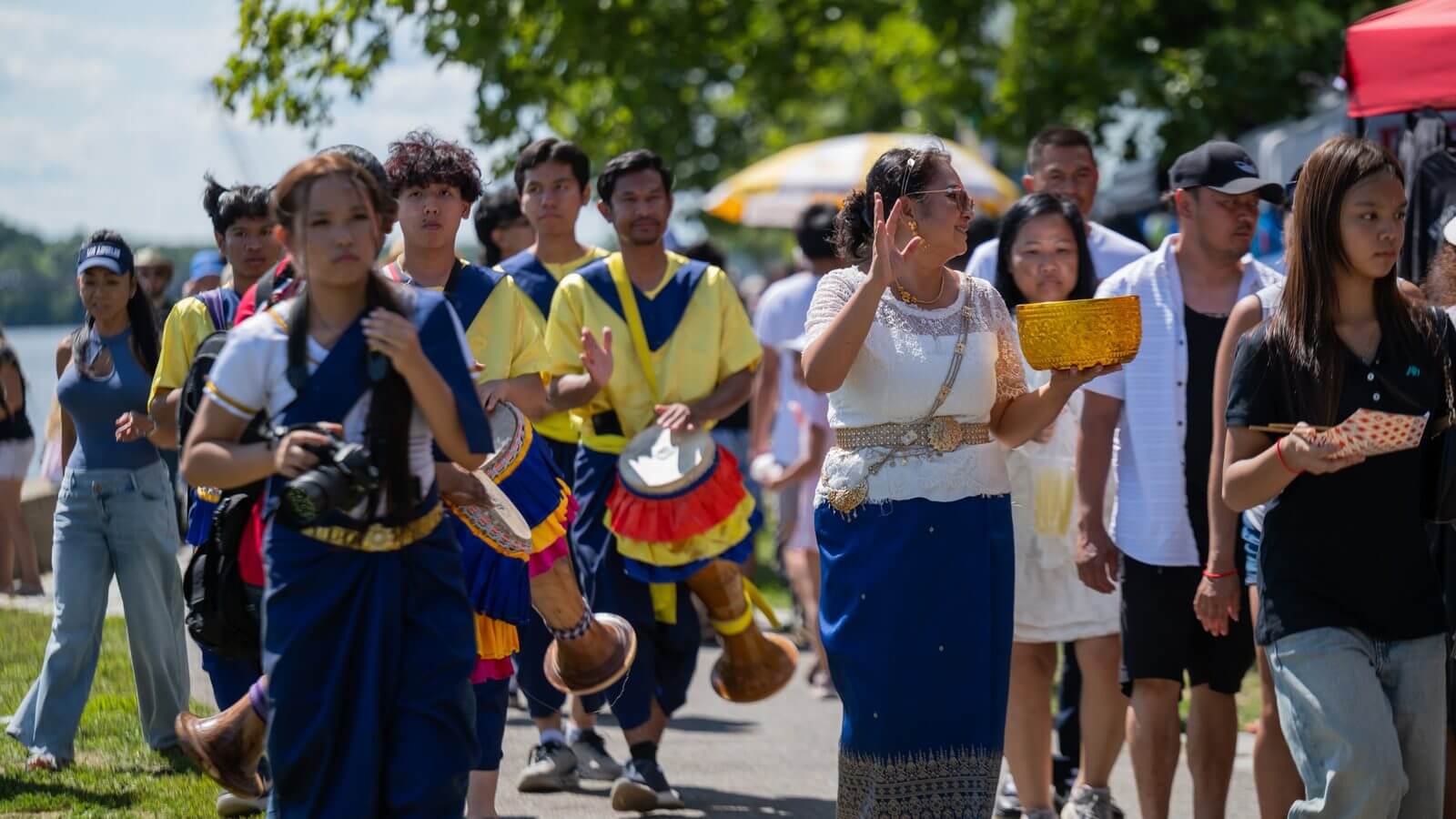
ACF and the Boston Foundation have focused on expanding our grantmaking to reflect the full breadth and diversity of the AANHPI nonprofit ecosystem. In 2024, nearly one-third of all grants to AANHPI-focused nonprofits in Massachusetts came from ACF and the Boston Foundation.
Just as important, ACF’s grants are much more likely than the state average to support underrepresented ethnic groups within the Asian diaspora, and to recognize and support smaller organizations that play a vital but often unseen role in their communities. A full 70 percent of ACF grantees have annual budgets under $500,000, more than three-quarters have five or fewer staff, and 31 percent are fully volunteer run.
4
Flexible funding is critical for AANHPI-focused nonprofits—and rare.
Nonprofits benefit from the flexibility and trust implied by grants of general operating support. Unfortunately, only about 21 percent of institutional grants to AANHPI nonprofits in Greater Boston between 2019–2023 provided general operating support. That lags well behind the national rate of 34 percent.
THE ACF RESPONSE: Recognizing the vital importance of general operating funds, ACF is four times as likely to make grants for general operating support—with 87 percent of our grants going to general operating since 2022. Remarkably, internal analysis of Candid data in 2024 shows that for more than two-thirds of Asian Community Fund grantees, ACF was their only institutional funder in that year.
General operating support
Share of grantmaking awarded as general operating support
“The significance of your grant cannot be overstated. With your support, we will be able to advance our mission and continue our vital work in creating new events and in-person free workshops for Indian and South Asian seniors. Together, we can create a brighter future for our community and beyond.”
Pratima Penumarthy, CEO, Volunteering for Seniors, Inc
5
Greater investment in AANHPI nonprofits is needed—and on the way.
Data show that institutional funding to AANHPI-focused organizations in Massachusetts more than doubled from 2019 to 2023, from $4.9 million to $13.6 million. While that number is still unacceptably low, considerable progress has been made since 2023. Since these baseline figures were captured, there has been strong grantmaking growth from the Asian Community Fund, other funders, and countless individual donors who give generously to AANHPI communities.
The Asian Community Fund at the Boston Foundation’s annual grantmaking, 2022–2027
Annual grant awards, dollars
THE ACF RESPONSE: For its 2027 grantmaking cycle, the Asian Community Fund has set a goal of distributing $1 million in grants to AANHPI-serving organizations. That is more than triple what ACF granted to nonprofit partners in 2023, the last year counted in the AAPIP report.
That growth is substantial and important, but no single fund or funder can close funding gaps alone. Addressing the historic underinvestment in AANHPI communities starts with sharing the data from sources like the AAPIP National and Greater Boston reports, but doesn’t end there. Armed with these insights, philanthropists, nonprofits, and advocates must come together to highlight the issues facing AANHPI communities in Greater Boston and Massachusetts and address the systemic disparities that still persist.
We invite you to join us in supporting the Asian Community Fund and the many community nonprofits that support and strengthen AANHPI and immigrant residents across the state. Together, we can drive greater resources to AANHPI and grassroots nonprofits, and advance belonging and prosperity for all who call Massachusetts home.
To learn more about the Asian Community Fund and its work, visit tbf.org/acf