
Review of early results of MBTA Communities Act finds law has produced “real but modest” gains, but not necessarily near transit
Report tracks nearly 7,000 housing units in the permitting and development pipeline to date, but under a third of those within a half-mile of transit
January 28, 2026
Boston – Five years after its initial passage, and after years of discussion in 177 cities and towns across Massachusetts, a new report finds that Greater Boston is seeing real but modest benefits from the MBTA Communities Act, with nearly 7,000 units of new housing in the development pipeline across more than 100 projects in Eastern Massachusetts.
The report, An Early Look at the MBTA Communities Permitting Pipeline, was compiled by Boston Indicators Senior Fellow Amy Dain to look at how the law has been implemented through a review of the projects in the construction pipeline that can be linked to the law’s passage and resulting zoning changes. To date, 34 communities have projects in the permitting pipeline, ranging in size from two to more than 500 units.
“Construction is happening as a direct result of the MBTA Communities law, but the law’s hallmark flexibility leaves a lot of leeway for communities to embrace or sidestep the law’s housing goals,” said Dain, who will host an author briefing on the new report on Friday, January 30 at 9:30 a.m. “As a result, while MBTA Communities has been the most effective state policy in recent years to encourage multi-family housing by right, its impacts in some areas, especially near transit stations, have been relatively modest compared to the overwhelming need.”
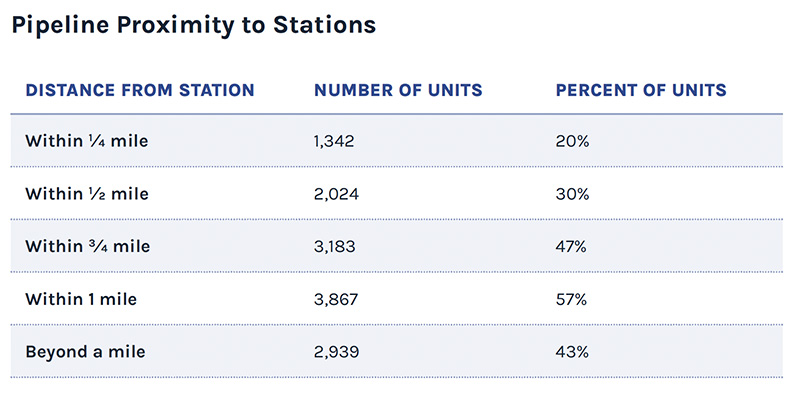
The data also reflect two interesting dimensions of the law’s implementation to date. The report notes that despite the “MBTA Communities” moniker, only about 30 percent of the units under development as a result of the law are within a half-mile radius of train stations. While that may come as a surprise to some observers, the report notes that the law’s implementation guidelines providing leeway for communities without developable land near transit to site their MBTA Communities zones elsewhere in their communities as needed. Dain notes that most of the projects in the pipeline have easy access to city and town centers, available bus service, and/or bike infrastructure that supports multimodal mobility.
In addition, the data highlight the challenges of creating the scale needed to significantly impact regional needs. Just nineteen projects, of more than 100 units each, make up three-quarters of MBTA Communities projects. The majority are small-scale projects of under 10 units, which are sometimes referred to as the “missing middle” scale between single-family homes and mid-rise apartment buildings. For these smaller projects to aggregate to the tens of thousands of homes required for the region would require both more building in MBTA Communities zones and an expansion of zoning districts far beyond what the law currently requires.
The mix also results from a choice in many communities to rezone industrial, office or retail areas, rather than single-family and two-family neighborhoods, to meet the law’s requirements. The law’s flexibility has meant some communities are carefully crafting zones that allow for current development while putting up guardrails again future projects, while other communities (Dain cites Newton specifically) are using the law to develop broader opportunities for so-called ‘missing middle’ housing, small projects that can be built on available lots with 10 or fewer units.
The report looks at implementation with examples from dozens of communities’ MBTA-C zoning plans, from communities whose zoning represents ‘incremental change’ to early adopters that ‘go above and beyond,’ such as Lexington, Westford, Lowell and Somerville, to a third category whose zoning is unlikely to lead to any increased production.
“As Amy notes, the flexibility that made the law more viable from a policy standpoint has made it more about fair zoning and less about transit-oriented development than the name would suggest,” said Luc Schuster, Executive Director of Boston Indicators. “MBTA Communities was never going to be the single solution to our region’s housing needs, but its progress could set the stage for continued development and the crafting of new, more ambitious efforts to provide housing for families in and around transit moving forward.”