

Paying Opportunity Forward: What a Senate Field Hearing Made Clear about Small Business Equity
By Keith A. Mahoney, Vice President for Public Affairs
March 3, 2026
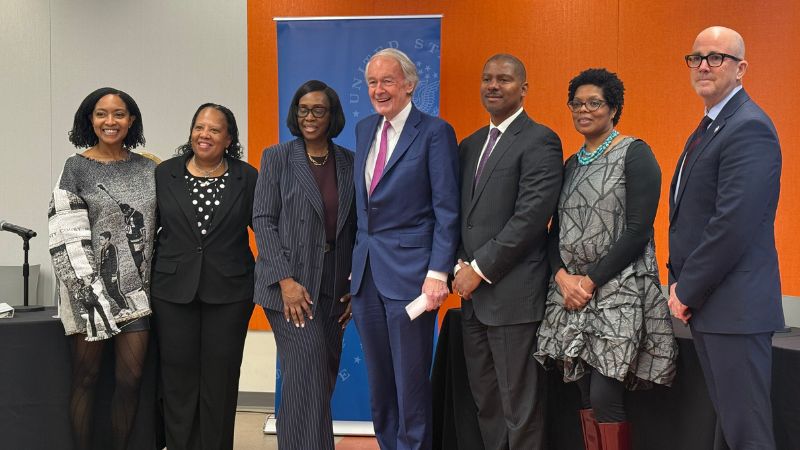
In February, I testified at a U.S. Senate field hearing hosted by Senator Edward J. Markey at Roxbury Community College. As Ranking Member of the Senate Committee on Small Business and Entrepreneurship, Senator Markey made an intentional choice to bring this conversation out of Washington and into the community—where small businesses are started, sustained, and too often constrained.
In 2020, amid the pandemic and a national reckoning on race, data laid bare what many entrepreneurs of color had long experienced. A U.S. Department of Commerce report found that businesses owned by people of color were denied loans at twice the rate of White-owned businesses—and when approved, paid interest rates 22 percent higher on average.
While many institutions pledged to respond, too many of those commitments proved temporary. But the challenge remains urgent. New businesses in Massachusetts are far more likely to be Black-, Latino-, or women-owned than older firms. If our systems do not change, exclusion will only deepen.
At the Boston Foundation, we believe equity work must last. That belief led us to launch the Business Equity Fund (BEF) in 2018—before equity became a headline.
The Fund provides patient, flexible, low-cost capital to established businesses of color that are performing well and ready to grow but are locked out of traditional financing.
To date, with early support from Eastern Bank, BEF has provided $2.3 million in loans to seven businesses, all of which survived COVID, and leveraged additional investments of $6 million, bringing total capitalization to $8.8 million.
The Business Equity Fund works because it is not a standalone solution. It operates within a coordinated system that pairs capital with capacity and market access. That system includes:
- The Business Equity Initiative, which funds trusted organizations providing technical assistance and networks
- The Greater Boston Chamber of Commerce’s Pacesetters Initiative, which expands procurement opportunities for businesses of color
Capital matters—but alignment is what makes it work.
"...businesses owned by people of color were denied loans at twice the rate of White-owned businesses—and when approved, paid interest rates 22% higher on average."
"New businesses in Massachusetts are far more likely to be Black-, Latino-, or women-owned than older firms. If our systems do not change, exclusion will only deepen."
The BEF was designed to recycle capital through repayment. But in 2020, rigid repayment schedules would have undermined the very businesses the Fund existed to support.
We paused loan payments for six months so owners could focus on retaining workers and keeping their doors open. This was not charity. It was intentional flexibility to protect long-term impact.
While in our elected officials in Washington D.C. struggle to pass any meaningful legislation, let alone funding measures to support the economy, the Business Equity Fund shows how targeted, locally rooted strategies can deliver outsized returns.
Consider OutKast Electrical Contractors Inc., a Black-owned firm in Dorchester employing 60 local union workers. In 2024, its financial partners abruptly closed its line of credit, pushing the company toward bankruptcy. The Local Enterprise Assistance Fund, or LEAF, a TBF grantee, stepped in—helping stabilize the business and preserve jobs.
This is what paying opportunity forward looks like.
Senator Markey’s field hearing made one thing clear: Economic justice is built through durable systems, not temporary promises. This was amplified by key colleagues such as Nicole Obi from the Black Economic Council of Massachusetts., Karim Hill from BDC Community Capital Corporation, and Mechalle Brown, mother of Celtics star Jaylen Brown and Director of the 7uice Foundation.
If we are serious about closing racial wealth gaps and strengthening Massachusetts’ economy, we must invest in models that endure political shifts, respond to conditions on the ground and in our communities, and treat equity as a permanent commitment.